Categories
Blog News

Angola: Blocks 17/25, 19, 32/21, 33/24, 34 and 35 – Additional Tax Incentives

27/08/2026

Angola: Blocks 17/25, 19, 32/21, 33/24, 34 and 35 – Additional Tax Incentives

The Angolan government has approved additional tax incentives for several deep and ultra-deepwater blocks to enhance their economic viability and stimulate investment. These blocks feature technical complexity, high operational costs, and heavy geological risks in their exploration and development.

Below is a summary of the blocks involved and the tax incentives granted:

Block 17/25 – Lower Congo Basin, operated by Total Energies (Incentives granted by Presidential Legislative Decree 8/26, of 24 August 2026); and

Block 32/21 – Lower Congo Basin, operated by Total Energies (Incentives granted by Presidential Legislative Decree 10/26, of 24 August 2026):

  • Presidential Legislative Decree 6/18, of 18 May 2018, introduced the concept of “Qualified Marginal Zones” (QMZ) and established several tax incentives to such areas. For Blocks 17/25 and 32/21, one or more deposits may be declared a QMZ if the following conditions are present:
    • The deposit holds less than 300 million barrels of recoverable reserves and an after-tax Internal Rate of Return below 20% (the IRR is calculated per the terms of the block’s Risk Service Contract);
    • The deposit holds more than 300 million barrels of recoverable reserves and an after-tax IRR below 15%.
  • However, any annual capital expenditures (capex) exceeding the “Capex Cap” established for a QMZ do not qualify for the Investment Premium afforded by DLP 6/18.

Block 19 – Kwanza Basin, operated by BG International Limited (Shell subsidiary) (Incentives granted by Presidential Legislative Decree 9/26, of 24 August 2026); and

Block 34 – Lower Congo Basin, operated by BG International Limited (Incentives granted by Presidential Legislative Decree 12/26, of 24 August 2026); and

Block 35 – Lower Congo Basin, operated by BG International Limited (Incentives granted by Presidential Legislative Decree 13/26, of 24 August 2026):

  • For these blocks, a QMZ may be declared if one or more deposits yield an after-tax IRR below 25%;
  • The investments and costs incurred in connection with the development of Emissions Reduction Projects within the Concession Area of these blocks are deductible for Petroleum Income Tax purposes over a 3-year period (at 33.33% per year);
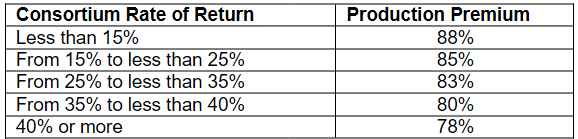
  • The following Production Premium applies within a QMZ:
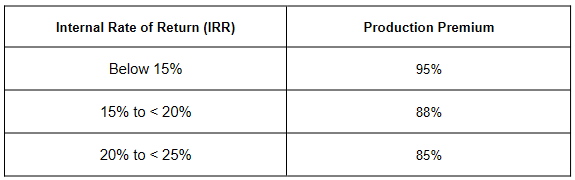


  • An Investment Premium is established at 35% of all investments and costs incurred in connection with the development of Emissions Reduction Projects within the Concession Area, which shall be deductible for Petroleum Income Tax purposes, effective from 1 January of the year in which production commences;
  • Another Investment Premium is established at 30% of all capital expenditures incurred within a QMZ (including in relation to Emissions Reduction Projects), which shall be deductible for Petroleum Income Tax purposes, effective from 1 January of the year in which production commences;
  • Provided that any investments or expenditures exceeding the “Capex Cap” of a Development Area or QMZ shall not qualify for the above Investment Premiums.

Block 33/24 – Lower Congo Basin, operated by Chevron (Incentives granted by Presidential Legislative Decree 11/26, of 24 August 2026):

  • For Block 33/24, one or more deposits may be declared a QMZ if the following conditions are present:
    • The deposit holds less than 300 million barrels of recoverable reserves and an after-tax Internal Rate of Return below 25% (the IRR is calculated per the terms of the block’s Risk Service Contract);
    • The deposit holds more than 300 million barrels of recoverable reserves and an after-tax Internal Rate of Return below 22.5% (the IRR is calculated per the terms of the block’s Risk Service Contract).
  • However, any annual capital expenditures (capex) exceeding the “Capex Cap” established for a QMZ do not qualify for the Investment Premium afforded by DLP 6/18.
  • The Ministry of Finance shall commission an annual independent audit to verify the IRR calculation made by the Contractor Group. If MinFin or Contractor Group disputes any audit adjustments to the IRR, the matter may be referred to an independent expert. The expert shall deliver a final and binding report to MinFin and Contractor Group for the IRR determination.
  • The investments and costs incurred in connection with the development of Emissions Reduction Projects within the Block 33/24 Concession Area are deductible for Petroleum Income Tax purposes over a 3-year period (at 33.33% per year);
  • Any exploration expenditures may be deducted against Petroleum Income Tax within the Concession Area (including a QMZ) regardless of where the expenditure is incurred.

Additionally, a stability mechanism is established for all blocks listed above whereby, if any future law is enacted that adversely affects these additional tax incentives, the National Concessionaire (ANPG) and the Contractor Group shall agree upon adjustments to the respective Risk Service Contract to restore the original economic equilibrium.
SHARE

Categories
Blog News

Angola: Co-insurance Legal Regime

14/08/2026

Angola: Co-insurance Legal Regime

Angola has introduced a mandatory co-insurance framework for strategic economic sectors to protect national interests and retain risk within the local insurance market. Presidential Decree 133/26, of 6 August 2026, establishes the organizational and operational rules for these special regimes.

Key Takeaways

  • Local Retention: The law aims to reduce the transfer of reinsurance premiums to foreign markets.
  • Mandatory Application: Co-insurance is now strictly required for all insurable risks in oil, mining, and aviation.
  • Capital Thresholds: Infrastructure sectors face mandatory co-insurance only for large risks exceeding USD 20 million.
  • Single Policy Rule: Each co-insurance pool must operate under a single policy issued by a designated Leader.

Scope of the Special Regimes

The law applies to two distinct categories of activities and assets:

1. Mandatory Sectors (All Risk Levels)

Co-insurance is required for all insurable risks in the following fields:

    • Petroleum activities
    • Mining activities
    • Civil aviation aircraft

2. Large-Scale Public Infrastructure & Specialized Lines

Risks must enter the co-insurance regime if the insured capital equals or exceeds USD 20,000,000.00:

    • Public telecommunications infrastructure
    • Public transport infrastructure
    • Public energy and water infrastructure
    • Specialized lines including engineering, marine hull, industrial multi-risk, construction, and fire/natural elements.

The Role of the Leader

Each co-insurance agreement is managed by one Leader (Seguradora Líder).

Eligibility Requirements

To qualify as a Leader, an insurer must:

  • Have at least 2 years of active participation in special co-insurance.
  • Maintain a solvency margin of 140% or higher for 3 consecutive years.
  • Prove technical and financial capacity for large risks.

Primary Functions

The Leader acts on behalf of the co-insurance pool to:

  • Issue the single policy and collect all premiums.
  • Negotiate and place reinsurance in international markets.
  • Settle insurance claims.

Operational Rules

Pool Membership

Any insurer authorized in Angola can join a co-insurance pool if they have operated in the non-life sector for at least 1 year, meet all financial solvency ratios, and maintain clean tax records.

No Joint Liability

Co-insurers are only liable to the insured party for their individual, specified percentage of the risk. There is no joint and several liability among pool members.

Policy Renewals

Policy renewals must be planned well in advance to match international reinsurance timelines. New proposals must be submitted to the Leader at least 5 months before expiration.

Reinsurance Broking

The Leader must place reinsurance through local or foreign brokers, selecting proposals that offer the best cost-benefit ratio and security.

Confidentiality

Pool members must maintain strict confidentiality regarding contract terms and business documents for a minimum of 5 years.

Sanctions and Compliance

The Insurance Supervisory Body (Organismo de Supervisão da Actividade Seguradora) is responsible for enforcing compliance and handling infractions.

Violations are classified as very serious infractions and carry heavy fines. Punishable offenses include:

  • Failing to subscribe to mandatory co-insurance.
  • Unjustified or abusive refusal to accept a risk.
  • Leaving a co-insurance pool without giving the required notice.
  • Breaching the 5-year confidentiality duty.

Transitional Provisions

Insurers holding active policies that meet the USD 20 million threshold must transfer those policies into the new Special Co-Insurance Regime during their next renewal period.

SHARE

Categories
Blog News

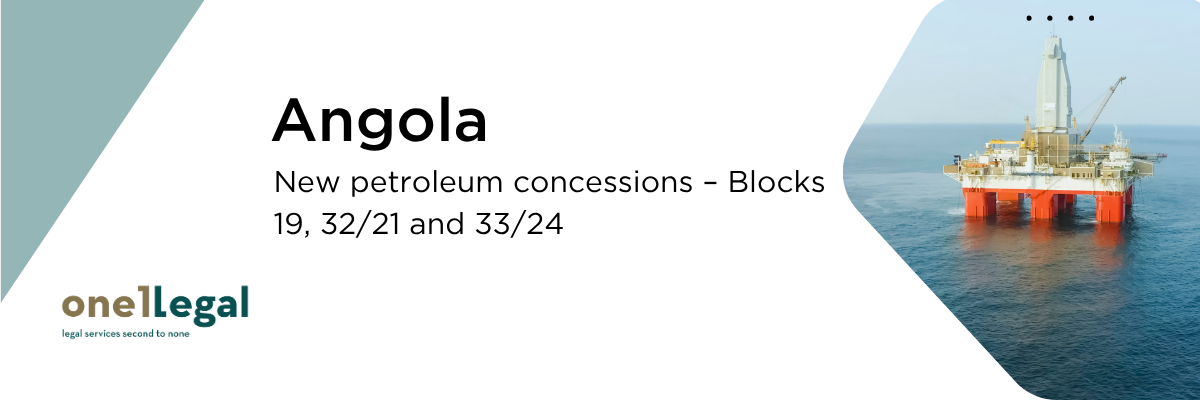
Angola: New petroleum concessions – Blocks 19, 32/21 and 33/24

06/08/2026

Angola: New petroleum concessions – Blocks 19, 32/21 and 33/24

Three (3) new petroleum concessions have been awarded under the following terms:

Block 19

Concession Decree: Presidential Decree 127/26, of 30 July 2026
Location: Offshore Kwanza basin
Operator: BG International Limited
Type of Contract: Risk Service Contract
Term: 5-year Exploration Period / 30-year Production Period for each Development Area from Declaration of Commercial Discovery
Fiscal & Economic Terms:

  1. 10% Petroleum Production Tax (Royalty)
  2. 35% Investment Premium on capex
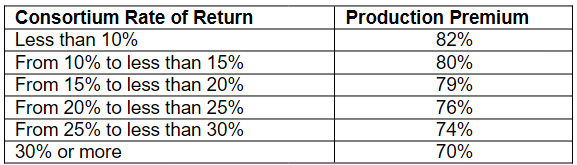
  3. Production Premium as follows:


Block 32/21

Concession Decree: Presidential Decree 128/26, of 30 July 2026
Location: Offshore Lower Congo basin
Operator: Total Energies EP Angola Block 32/21
Type of Contract: Risk Service Contract
Term: 5-year Exploration Period / 30-year Production Period for each Development Area from Declaration of Commercial Discovery
Fiscal & Economic Terms:

  1. 10% Petroleum Production Tax (Royalty)
  2. 30% Investment Premium on capex
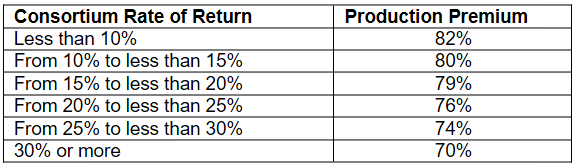
  3. Production Premium as follows:


Block 33/24

Concession Decree: Presidential Decree 129/26, of 30 July 2026
Location: Offshore Lower Congo basin
Operator: Chevron Block 33, Limited
Type of Contract: Risk Service Contract
Term: 5-year Exploration Period / 30-year Production Period for each Development from Declaration of Commercial Discovery
Fiscal & Economic Terms:

  1. 10% Petroleum Production Tax (Royalty)
  2. 30% Investment Premium on capex
  3. Production Premium as follows:

SHARE

Categories
Blog News

Angola: Holding Companies Legal Regime

03/08/2026

Angola: Holding Companies Legal Regime

Promulgated on July 30, 2026, Presidential Legislative Decree 5/26 introduced Angola’s new legal framework for Holding Companies (“Sociedades Gestoras de Participações Sociais” or “SGPS”). Below is an outline of the Holding Company regime:

Purpose: The exclusive corporate purpose of a holding company is the acquisition, ownership, and management of equity stakes in other companies, subject to the following cumulative conditions:
Minimum Holding Period: The equity stake must be maintained for a continuous period exceeding one year.

Minimum Voting Rights: The investment must represent at least 10% of the target entity’s voting rights, held either directly or indirectly through subsidiaries controlled by the SGPS. By way of exception, a holding company may hold an equity stake below the 10% voting rights threshold in the following cases:

  1. The aggregate value of all stakes below 10% does not exceed 30% of the total value of the holding company’s qualifying investments (those equal to or exceeding 10%); or;
  2. The equity stake complies with the minimum thresholds established by the Angolan Securities Market Commission (CMC); or
  3. The equity stake results from a merger, spin-off or any other form of corporate restructuring of the target company.

Requirements: The holding company must satisfy the following requirements:

  1. Be incorporated under the laws of the Republic of Angola;
  2. Maintain both its registered office and effective management within Angola;
  3. Adopt the legal structure of a joint stock company (“Sociedade Anónima” or “S.A.”);
  4. Issue share capital represented exclusively by registered shares;
  5. The Articles of Association/Bylaws must state that its exclusive corporate purpose is holding and managing equity stakes (certain restrictions may be imposed on the eligible target companies);
  6. Include the designation “Sociedade Gestora de Participações Sociais” or the acronym “SGPS” in its corporate name.

Foreign Companies: The holding company may acquire and hold equity stakes in companies incorporated outside of Angola.

Intra-Group Services: The holding company may provide management services to any or all of its investee companies. All such services must be remunerated and formalized through a written contract.

Prohibited Operations: The holding company is prohibited from:

  1. Acquiring real estate, except for its own use, or for the use of its investee companies, or as result of debt recovery or investee company liquidation;
  2. Extend loans, except to investee companies which are controlled by the holding company.

An investee company is prevented from acquiring shares in its respective holding company, except in the limited cases expressly permitted by the Company Law.

Supervision: Holding companies are subject to the regulatory supervision of the Securities Market Commission (“CMC”). Holding companies shall submit an annual report to the CMC detailing their portfolio of companies.

Auditing: Holding companies must appoint an external auditor registered with the CMC.

Fees: Holding companies shall be subject to the payment of fees to the CMC for regulatory actions and services rendered.

Penalties: Penalties for breach of PLD 5/26 shall range from AOA 2.000.000 to AOA 50.000.000 in case of negligence, and from AOA 10.000.000 to AOA 500.000.000 in case of willful misconduct.

Proceeds from penalties shall be allocated to the CMC (60%) and the Treasury (40%).

Grace Period: Existing holding companies shall have a grace period of 180 days to achieve full compliance with the new law.

SHARE